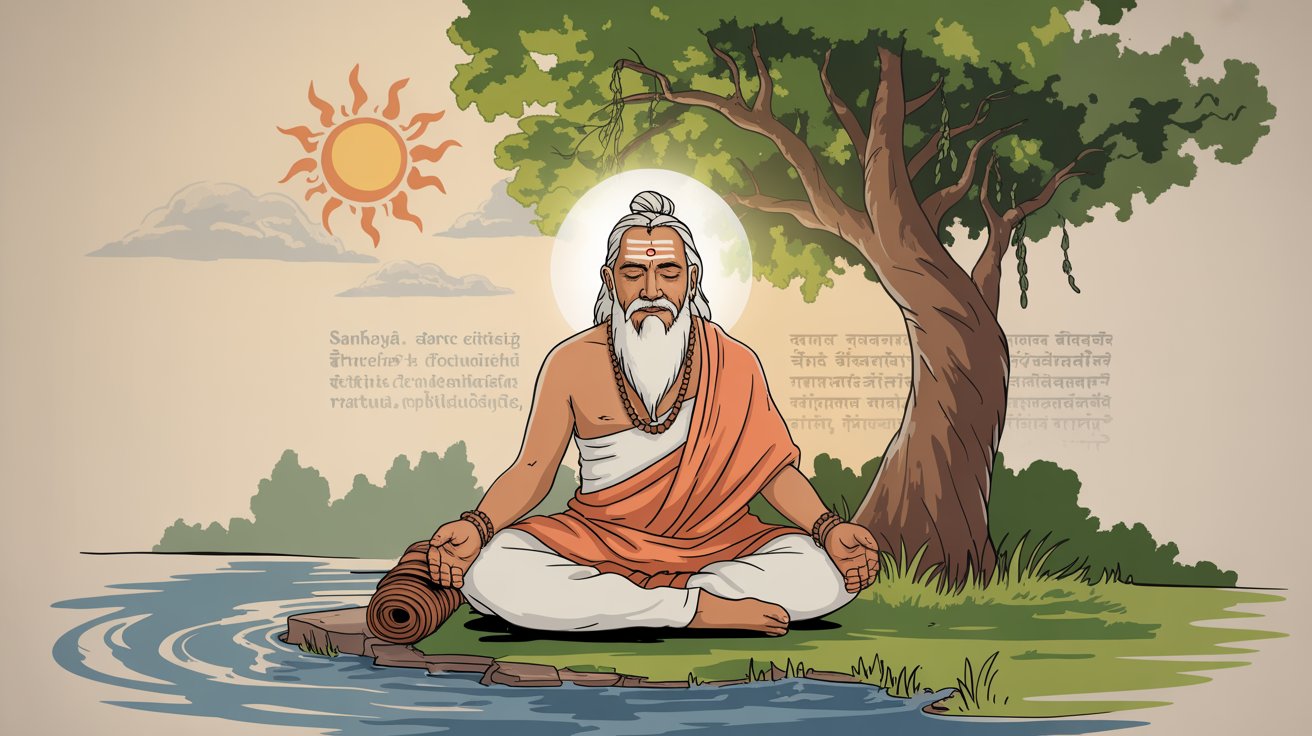
Sankhya Darshan: Introduction
The Indian branch of philosophy is divided into two parts, theistic and atheistic. Under the theistic branch, there are six major philosophies that believe in the Vedas. These six philosophies are also known as Shaddarshan. These philosophies include Sankhya Darshan, Yoga Philosophy, Nyaya Philosophy, Vaisheshik Philosophy, Purva Mimamsa Philosophy and Vedanta Philosophy.
Sankhya Darshan is considered to be the oldest and most authentic philosophy. This philosophy is an atheistic philosophy. This philosophy is dualistic. According to Sankhya Darshan, Purusha and Prakriti are two eternal elements, whose union leads to the development of the universe. This philosophy is very influential in the field of Ayurveda, Yoga and mental peace.
History and Origin
India’s first philosopher Maharishi Kapil has composed Sankhya Darshan. This philosophy is connected to the tradition of Vedic and Upanishads. The commentary of Sankhya Darshan, Sankhyakarika, was written by Ishwarkrishna in the fourth century. This philosophy originated due to the purpose of explaining numbers and perfect knowledge of reality.
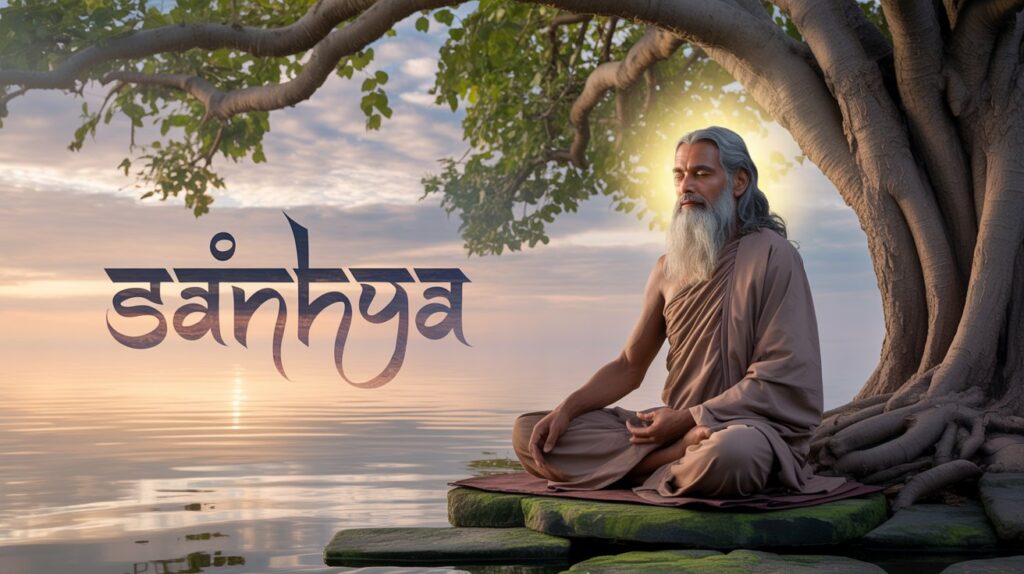
Main Principle of Sankhya Darshan
✅ 1.Dualism (Two Eternal Elements)
Sankhya philosophy is a dualistic philosophy. It recognizes two different elements. The first element is Purusha (conscious element) and the second element is Prakriti (inanimate element).
Purush – Purusha is an eternal reality. It is not a substance or an object. It is neither body, nor mind, nor intellect. It is the basis and the supreme of all knowledge and is devoid of the three Gunas.
Prakriti – It is the basic substance in which the entire functionality of this universe exists. It includes three Gunas- Sat, Raja and Tama.
The universe expands with the cooperation of both Purusha and Prakriti.
✅ 2. Evolution Process of Prakriti
According to Sankhya philosophy, 24 elements develop from nature and with the addition of the ‘male’ element the total number of elements becomes 25.
Category of development
1. Nature
2. Important elements (intellect)
3. Ego
4. Mind, sense organs (5), action organs (5), tanmatras (5)
5. Mahabhuta (5)
This process is called Satkaryavada, which means that the effect is already present in its cause.
✅3.Denial of God
Sankhya philosophy is a theistic philosophy but it does not believe in the existence of God. It believes that this universe is governed by the qualities of nature and the presence of man, that is why this philosophy is also called atheistic philosophy.
✅4.Liberation
In this philosophy, two paths of salvation are mentioned, Jeevan Mukti and Vidheya Mukti. Jeevan Mukti means to know the truth while alive and Vidheya Mukti means complete salvation i.e. salvation after death. No worship or grace of God is necessary for salvation, rather discretion and knowledge are the means of salvation.
🔷 Comparison with other philosophies
☑️ Sankhya vs Yoga Philosophy:
• Yoga philosophy also follows the rules of Sankhya but the existence of God has been accepted in Yoga philosophy. Yoga philosophy is based on the Yoga Sutra of Patanjali.
☑️ Sankhya vs Vedanta:
Vedanta follows monism – only Brahma is the truth.
Sankhya follows dualism – both Purusha and Prakriti are eternal.
☑️ Sankhya vs Buddhist
Buddhist philosophy is a supporter of atheism and momentism while Sankhya considers the soul i.e. Purusha as eternal.
Modern relevance of Sankhya philosophy
Sankhya philosophy is not only a philosophical idea but it also contributes to today’s knowledge, science, psychology and yoga methods.
Its concept of elementalism seems to be related to today’s psychology and logic.
The ideas of Sankhya philosophy are also clearly shown in many verses of the Bhagavad Gita.
Conclusion
This philosophy is an invaluable philosophy of the Indian tradition of knowledge which explains the creation of this universe and the concept of salvation on the basis of wisdom and experience. This philosophy teaches us that salvation is not outside the person but within him and it is possible only when the person recognizes his true identity i.e. Purusha as separate from Prakriti.

1 thought on “Sankhya darshan”